Meta Title: Delta DIAView SCADA — Complete Setup, PLC Integration & Configuration Guide (2026)
Meta Description: Complete guide to Delta DIAView SCADA: Stand-alone/C-S/B-S architecture, PLC communication setup, graphic screen design, alarm management, data logging, and comparison with Siemens WinCC and Wonderware.
Target Keywords: Delta DIAView SCADA setup guide, DIAView SCADA Delta PLC configuration, Delta DIAView SCADA tutorial, DIAView SCADA Modbus OPC setup, Delta DIAView vs WinCC, DIAView SCADA license
Suggested URL: docrack.me/en/delta-diaview-scada-guide/
What Is Delta DIAView SCADA?
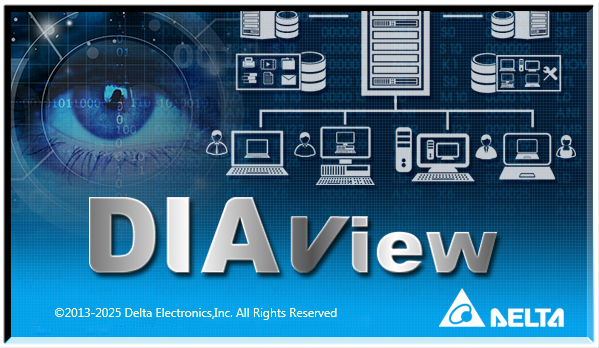
Delta DIAView is a SCADA (Supervisory Control and Data Acquisition) software system developed by Delta Electronics — one of the world’s leading industrial automation manufacturers. It provides a complete platform for real-time monitoring, data acquisition, process visualization, alarm management, and production reporting for industrial automation applications.
DIAView is part of Delta’s broader DIA (Delta Industrial Automation) software ecosystem, designed to work natively with Delta’s own automation hardware — DVP and AH series PLCs, delta VFDs (AC motor drives), power meters, temperature controllers, industrial robots, and HMI panels — while also supporting third-party equipment through standard protocols.
Version 4.3.1 is the current production release used in most active deployments. The software supports three distinct deployment architectures to match different scale and access requirements.
Delta DIAView is widely used across Southeast Asia, South Asia, and East Asia where Delta’s automation products dominate the market, and is gaining adoption in other regions as Delta expands its global industrial automation footprint.
Who Uses Delta DIAView?
- Systems integrators building factory automation solutions on Delta hardware
- Manufacturing plants monitoring production lines, machines, and process variables
- Water treatment and HVAC facilities requiring centralized process monitoring
- Energy management teams integrating Delta power meters with supervisory visualization
- Building management system (BMS) integrators connecting HVAC, lighting, and access control
- Food, textile, and packaging manufacturers using Delta automation equipment
- OEM machine builders embedding DIAView in their machine control consoles
System Architecture Options
DIAView supports three deployment architectures, each suited to different facility sizes and access requirements:
Stand-alone Mode
The simplest configuration — DIAView runs on a single PC that connects directly to field devices (PLCs, drives, meters) and serves as both the data acquisition server and the operator workstation.
Best for: Small facilities, single machine monitoring, compact production lines, or deployments where one operator station is sufficient.
Configuration: One PC running DIAView software, connected via Ethernet or serial to field devices.
Client/Server (C/S) Mode
A dedicated DIAView Server PC handles all communication with field devices, data storage, and processing. Multiple client workstations connect to the server over TCP/IP to display live data and send operator commands.
- DIAView Server supports up to 10 simultaneous client connections
- Clients can be located anywhere on the corporate LAN
- Server runs continuously; clients connect as needed
- Operators on different workstations see the same live data synchronized through the server
Best for: Medium to large facilities with multiple control rooms or operator stations, multi-shift operations, or where different departments need access to process data.
Web Browser/Server (B/S) Mode
Extends the C/S architecture with a web server component that serves the operator interface to any standard web browser — enabling monitoring from laptops, tablets, and smartphones without installing the DIAView client software.
Best for: Remote monitoring, management dashboards for supervisors and plant managers, mobile access for maintenance staff, and multi-site enterprise monitoring.
Core Features
Graphic Screen Design — WPF Technology
DIAView uses Windows Presentation Foundation (WPF) technology for its graphic interface editor, providing high-quality rendering and smooth animations. The screen editor includes:
Drawing tools:
- Basic geometric shapes (lines, rectangles, circles, polygons)
- Pre-built industrial graphic symbols (valves, motors, pumps, tanks, conveyors, pipes)
- Custom symbol library — import and reuse your own graphic elements
- Text labels and dynamic text objects
- Trend charts, bar charts, pie charts (2D and 3D), and XY scatter plots embedded directly in screen layouts
Animation and dynamic binding:
- Bind any graphic property (color, size, position, rotation angle, visibility) to a process variable
- Color change on threshold — indicate normal, warning, and alarm states visually
- Fill level animation — tanks and vessels fill/drain based on actual measured level values
- Movement animation — conveyor belts, rotating components, traveling indicators
- Events — trigger actions from mouse clicks or keyboard inputs (open popups, send commands to PLC, navigate to other screens)
Screen hierarchy:
- Multiple screens (pages) per project with navigation buttons
- Pop-up windows for detailed views or operator input forms
- Full-screen and windowed display modes
- Multi-monitor support for separate live view and alarm/historical displays
IO Communication — PLC and Device Connectivity
DIAView communicates with field devices through a channel and device configuration model. A channel defines the communication medium and protocol; devices are the physical equipment on that channel.
Communication interfaces supported:
- Serial port (RS-232, RS-485)
- Ethernet (TCP/IP)
- USB (for direct PC-to-PLC connections)
Communication protocols and drivers (20+ protocols):
Delta native protocols:
- Delta DVP series PLCs (DVP-12SE, DVP-20SX, DVP-28SS, DVP-32ES, etc.) — via Modbus RTU (serial), Modbus ASCII (serial), Modbus TCP/IP (Ethernet), and Delta proprietary protocols
- Delta AH series PLCs (AH500, AH2000) — via Ethernet and serial
- Delta HMI (DOP series) — for cascaded HMI-SCADA configurations
- Delta power meters (DPM series) — direct integration
Industry standard protocols:
- Modbus TCP/IP — connect to any Modbus-compatible device (PLCs, drives, meters from any manufacturer)
- Modbus RTU (serial) — legacy serial device integration
- Modbus ASCII (serial)
- OPC DA — connect to any OPC server, enabling integration with third-party SCADA/PLC systems
Additional drivers:
- Various PLC brands via third-party communication drivers
- Simulator driver for development and testing without physical hardware
Variable configuration: Variables (tags) map to specific memory addresses in the connected devices. DIAView’s variable dictionary manages all project variables centrally — define name, data type, device address, scaling factors, and engineering units. All screen objects, alarms, historical logs, and reports reference variables by name.
Alarm Management
DIAView’s alarm system monitors process variables against configured limits and notifies operators of abnormal conditions:
Alarm configuration:
- High limit, low limit, high-high limit, low-low limit alarms per variable
- Alarm levels (informational, warning, alarm, critical) with different visual and audible responses
- Alarm groups for organizing alarms by area, machine, or priority
- Configurable alarm text messages
- Alarm delay — prevent nuisance alarms from momentary transients
Alarm display:
- Real-time alarm list showing active alarms with timestamp, variable, value, and alarm text
- Color-coded alarm rows by severity
- Alarm acknowledgment by operator with username and timestamp recorded
- Alarm filtering by group, time range, or status
Alarm history and reporting:
- Complete alarm history log — trigger time, response time, recovery time, acknowledging operator
- Export alarm records to Excel for reporting
- Alarm statistics — frequency analysis to identify recurring problems
Alarm notification:
- Audible alarm sounds
- Pop-up alarm windows
- Email notification (configurable SMTP)
- SMS notification (with appropriate hardware/service)
Data Logging and Historical Trending
Variable logging:
- Configure any variable for periodic logging (time-triggered) or event-triggered recording
- Configurable logging interval (from seconds to hours)
- Logged data stored in DIAView’s internal database
Trend display:
- Real-time trend charts showing variable values over time
- Historical trend review — navigate backward through recorded data
- Multiple variables on the same trend chart with independent Y-axis scaling
- XY charts for correlation analysis between two variables
- Zoom and pan on trend charts
Database access:
- DIAView uses an internal database for variable and alarm history
- Query historical data by time range, variable name, or alarm status
- Export to Excel for further analysis
Smart Report Wizard
DIAView includes a guided report creation tool:
- Select data sources (variables, alarm logs, production counters)
- Choose report layout template or customize
- Select chart types (bar, line, pie)
- Schedule automatic report generation (daily, weekly, monthly, or on-demand)
- Output as PDF or Excel format
Reports can include real-time data, historical trends, alarm summaries, and production statistics in a single formatted document.
User Management and Security
- Up to 32 configurable user accounts plus administrator
- User login with username and password
- Multiple permission levels controlling which screens, commands, and configuration functions each user can access
- Automatic logout after inactivity timeout
- Complete operator action log — records all changes, commands, and acknowledgments with username and timestamp for audit purposes
Installation and Configuration Guide
System Requirements
| Component | Minimum | Recommended |
|---|---|---|
| OS | Windows 7 (64-bit) | Windows 10/11 (64-bit) |
| CPU | Intel Core i3 | Intel Core i5 or i7 |
| RAM | 4 GB | 8 GB |
| Storage | 20 GB free | SSD, 50+ GB |
| Display | 1024 × 768 | 1920 × 1080 or dual monitor |
| .NET | .NET Framework 4.5 | .NET Framework 4.8 |
Installation Steps
- Run
DIAViewSetup.exefrom the installation media - Select installation language
- Accept the license agreement
- Choose installation directory (default:
C:\Program Files\Delta Industrial Automation\DIAView) - Select components to install (main application, drivers, samples)
- Complete installation — a USB hardware dongle (Senselock EliteIV) provides license enforcement
- Insert the USB dongle before launching DIAView
USB dongle note: DIAView uses a hardware security dongle. Ensure the Senselock EliteIV driver is properly installed. If the dongle is not recognized, check Device Manager under “Senselock EliteIV v2.x” and reinstall the driver if needed.
Creating a New Project
- Launch DIAView → File → New Project
- Enter project name and save location
- Configure project settings (resolution, color depth, language)
- The project environment opens with the Screen Editor, Variable Dictionary, and configuration panels
Configuring a Delta PLC Communication Channel
- In the project tree, right-click IO Communication → Add Channel
- Select protocol: for a Delta DVP PLC on Ethernet, choose “Delta DVP TCP/IP”
- Configure channel parameters: IP address of the PLC, port number (default 502 for Modbus TCP)
- Right-click the new channel → Add Device
- Enter the device name, PLC station number (usually 1)
- Click Test Connection to verify communication
Adding Variables
- Open the Variable Dictionary
- Click Add Variable
- Enter variable name (e.g.,
Tank1_Level) - Select the device (the PLC configured above)
- Enter the PLC memory address (e.g.,
D100for data register 100) - Set data type (INT, DINT, FLOAT, BOOL, etc.)
- Configure engineering units and scaling if needed
Building a Screen
- Right-click Screens → Add Screen — name it (e.g.,
Overview) - The screen editor opens — drag and drop graphic elements from the toolbox
- Double-click a graphic object to open its properties
- In the Animation tab, bind properties to variables (e.g., bind a tank’s fill level to
Tank1_Level) - Set color change thresholds for alarm indication
- Add trend charts, alarm lists, and navigation buttons as needed
DIAView vs. Competing SCADA Platforms
| Feature | Delta DIAView 4.3 | Siemens WinCC | AVEVA InTouch | Ignition (Inductive) |
|---|---|---|---|---|
| Delta PLC native integration | ✅ Deep | Via OPC/driver | Via OPC/driver | Via Modbus/OPC |
| Third-party PLC support | Modbus + OPC + drivers | ✅ Extensive | ✅ Extensive | ✅ Extensive |
| Price positioning | Budget–mid market | Enterprise | Enterprise | Mid market |
| Web/mobile access | ✅ B/S mode | ✅ | ✅ | ✅ Excellent |
| C/S concurrent clients | 10 (base) | Scalable | Scalable | Unlimited |
| Alarm management | ✅ Comprehensive | ✅ Advanced | ✅ Advanced | ✅ |
| Historical trending | ✅ | ✅ | ✅ | ✅ |
| Report generation | ✅ Wizard-based | ✅ | ✅ | ✅ |
| OPC DA/UA support | ✅ OPC DA | ✅ OPC DA/UA | ✅ | ✅ OPC UA |
| License model | Perpetual + dongle | Per tag / subscription | Per I/O point | Per server (unlimited tags) |
| Free/trial version | ✅ Simulator | ❌ | ❌ | ✅ |
| Learning curve | Low-moderate | High | High | Moderate |
Choose Delta DIAView when: Your automation hardware is primarily or entirely Delta (DVP, AH series PLCs, Delta VFDs, Delta power meters). You want native, deep integration with Delta equipment at a competitive price point. You are building factory automation in Southeast Asia, South Asia, or other markets where Delta hardware is dominant.
Choose Siemens WinCC when: Your control hardware is primarily Siemens (S7 series PLCs) and you need the deepest possible integration with TIA Portal, Siemens HMIs, and the Siemens automation ecosystem.
Choose AVEVA InTouch / System Platform when: You are building an enterprise-wide SCADA platform with multi-vendor hardware, integration with ERP/MES systems, and advanced workflow management.
Choose Ignition when: You need unlimited tags and clients without per-point licensing costs, want strong OPC UA integration, and need the most flexible web and mobile access.
Industry Applications
DIAView is applicable across virtually any process industry:
Manufacturing: Machine monitoring, production line visualization, OEE (Overall Equipment Effectiveness) tracking, quality control data logging.
Water and Wastewater Treatment: Pump station monitoring, chemical dosing control, remote telemetry for distributed sites.
HVAC and Building Management: Chiller, AHU, and cooling tower monitoring; energy consumption tracking; temperature and humidity visualization.
Energy Management: Power meter integration (Delta DPM series), electricity consumption monitoring, peak demand management, power quality analysis.
Food and Beverage: Batch process monitoring, temperature logging for regulatory compliance, recipe management.
Textile and Packaging: Production speed monitoring, machine status dashboards, shift production reporting.
Smart Buildings and Infrastructure: Integrated building systems monitoring combining HVAC, electrical, security, and production data.
Frequently Asked Questions
Is Delta DIAView compatible with non-Delta PLCs? Yes. DIAView includes Modbus TCP/IP, Modbus RTU, and OPC DA drivers that enable communication with PLCs and devices from Siemens, Allen-Bradley, Mitsubishi, Omron, and any other manufacturer supporting these standard protocols. However, the deepest native integration (direct symbolic addressing, automatic variable import) is available for Delta’s own PLCs.
How many I/O tags (variables) does DIAView support? The tag count depends on the license edition. Contact Delta Electronics or your local distributor for current license specifications — editions vary by concurrent I/O count.
Can DIAView connect to OPC servers? Yes. DIAView includes an OPC DA client driver, allowing it to connect to any OPC DA server. This enables integration with Siemens WinCC, Schneider OPC Factory Server, Kepware KEPServerEX, and other OPC-based data sources.
Does DIAView support redundant server configurations? Standard DIAView does not include built-in server redundancy. For mission-critical applications requiring high availability, consult Delta’s enterprise support for available options or consider architectural redundancy at the hardware level.
What is the maximum number of client connections in C/S mode? The base DIAView Server license supports up to 10 simultaneous client connections. For larger deployments requiring more concurrent users, contact Delta for expanded licensing options.
Is there a free version or trial? DIAView includes a built-in simulator mode that allows development and testing without a hardware dongle. This enables learning the software and building projects without purchasing a license. The simulator does not connect to real field devices — it uses simulated variable values for testing screen animations and logic.
Summary
Delta DIAView SCADA 4.3 is the natural and most capable SCADA choice for automation systems built on Delta Electronics hardware. Its native integration with DVP and AH series PLCs, Delta VFDs, and Delta power meters — combined with a competitive price point, straightforward configuration workflow, and support for all standard protocols (Modbus, OPC) for third-party devices — makes it a practical and cost-effective solution for small to medium industrial automation applications.
For large enterprise-scale platforms or systems with highly mixed multi-vendor hardware, more extensive platforms like Ignition or AVEVA may offer advantages in scalability and integration depth. But for Delta-centric automation deployments, DIAView provides everything needed without the cost and complexity of enterprise-tier SCADA platforms.
For licensing assistance or DIAView configuration support, contact our team via Telegram: t.me/DoCrackMe
Related articles: Delta DIAView PLC Communication Setup — DVP and AH Series | DIAView SCADA Alarm Configuration Complete Guide | Delta DIAView vs Ignition — Which SCADA for Delta PLC Systems?